Four ways to meet Zhangjiajie.
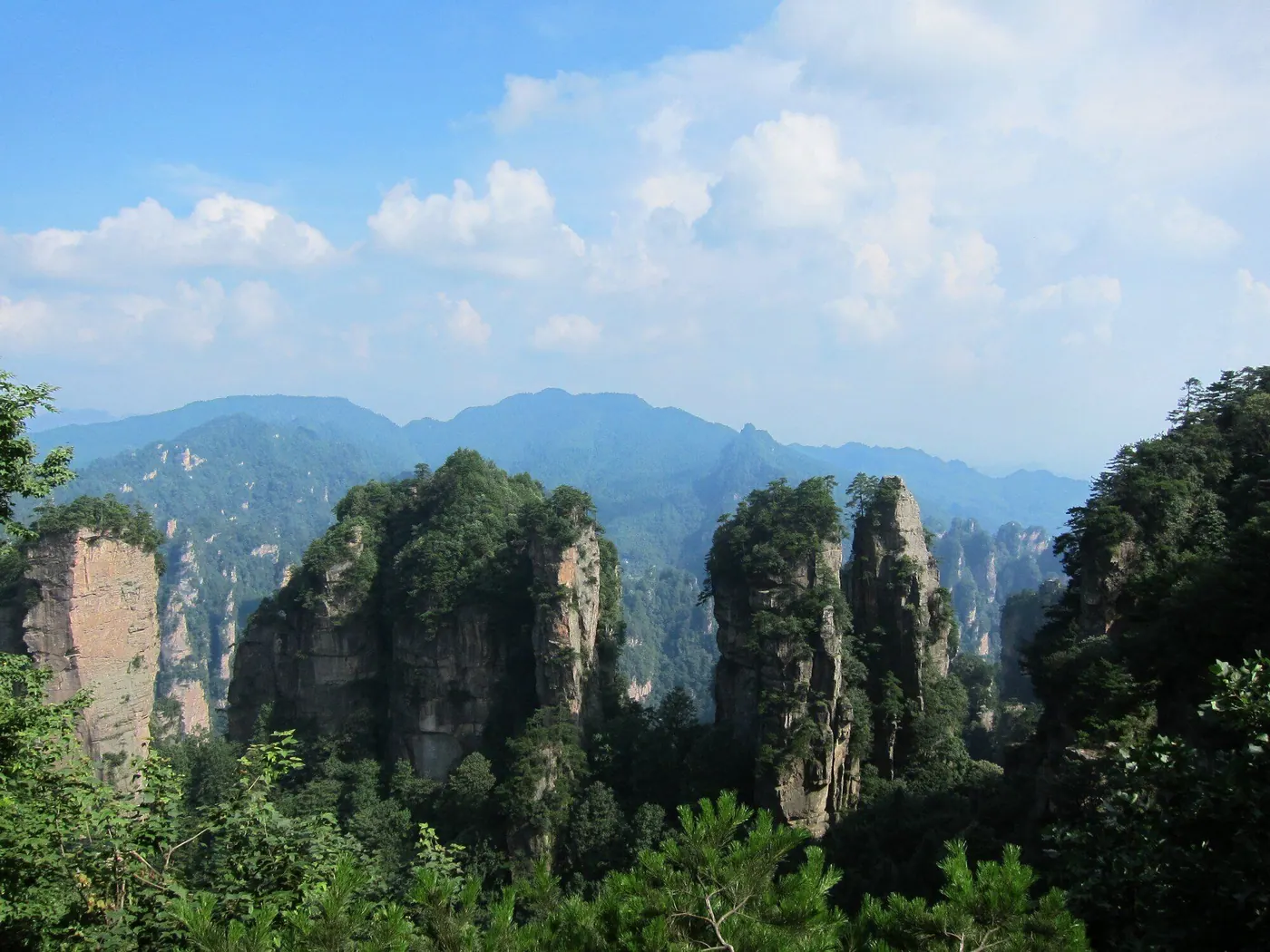
Zhangjiajie National Forest Park
Zhangjiajie National Forest Park, China’s first‑ever national forest park, sits in the mountainous northwest of Hunan Province. Listed as a UNESCO World Natural Heritage Site, it is famous for the one‑of‑a‑kind quartz‑sandstone peak‑forest landform, widely known as “Zhangjiajie Landform”.More than 3,000 slender stone pillars rise straight from deep valleys, piercing through sea‑like clouds and mist. Many peaks tower over 200 metres, draped with hardy pine trees on their summits. The towering Qiankun Pillar, prototype of the floating Hallelujah Mountains in the movie *Avatar*, stands within Yuanjiajie Scenic Area, bringing the fantasy cinematic scene into the real world.
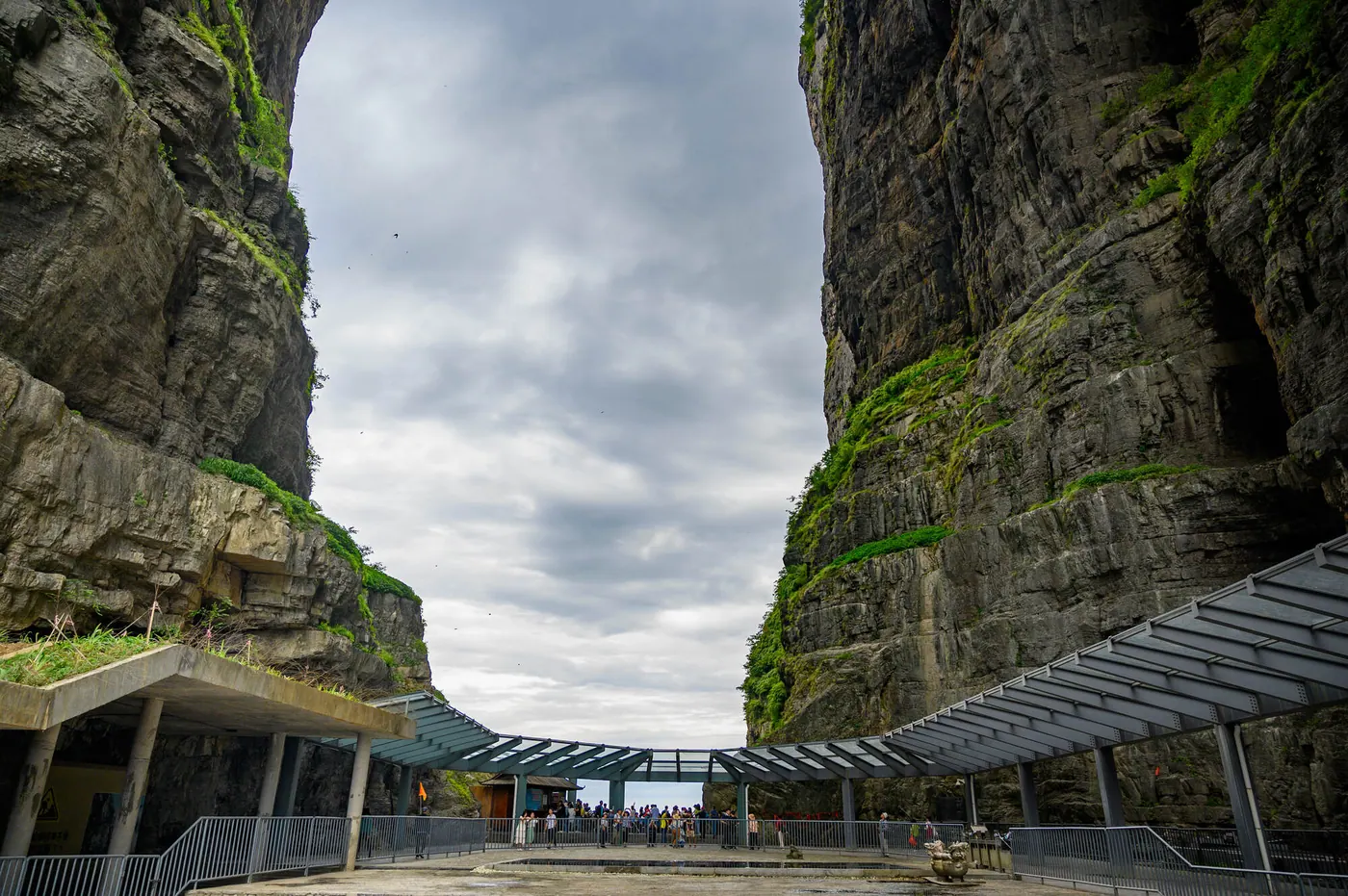
Tianmen Mountain & Heaven's Gate
A cableway climbs almost five miles to Tianmen's summit, over terraced fields and a coil of road with ninety-nine hairpin bends. Up top, the Coiling Dragon Cliff skywalk hugs a sheer wall of glass above the void, while below, the colossal natural arch of Heaven's Gate (Tianmen Cave) pierces the mountain — a holy portal framed by 999 steps. It is exhilarating, vertiginous and unforgettable in equal measure, and mercifully there are solid paths for the faint of heart.
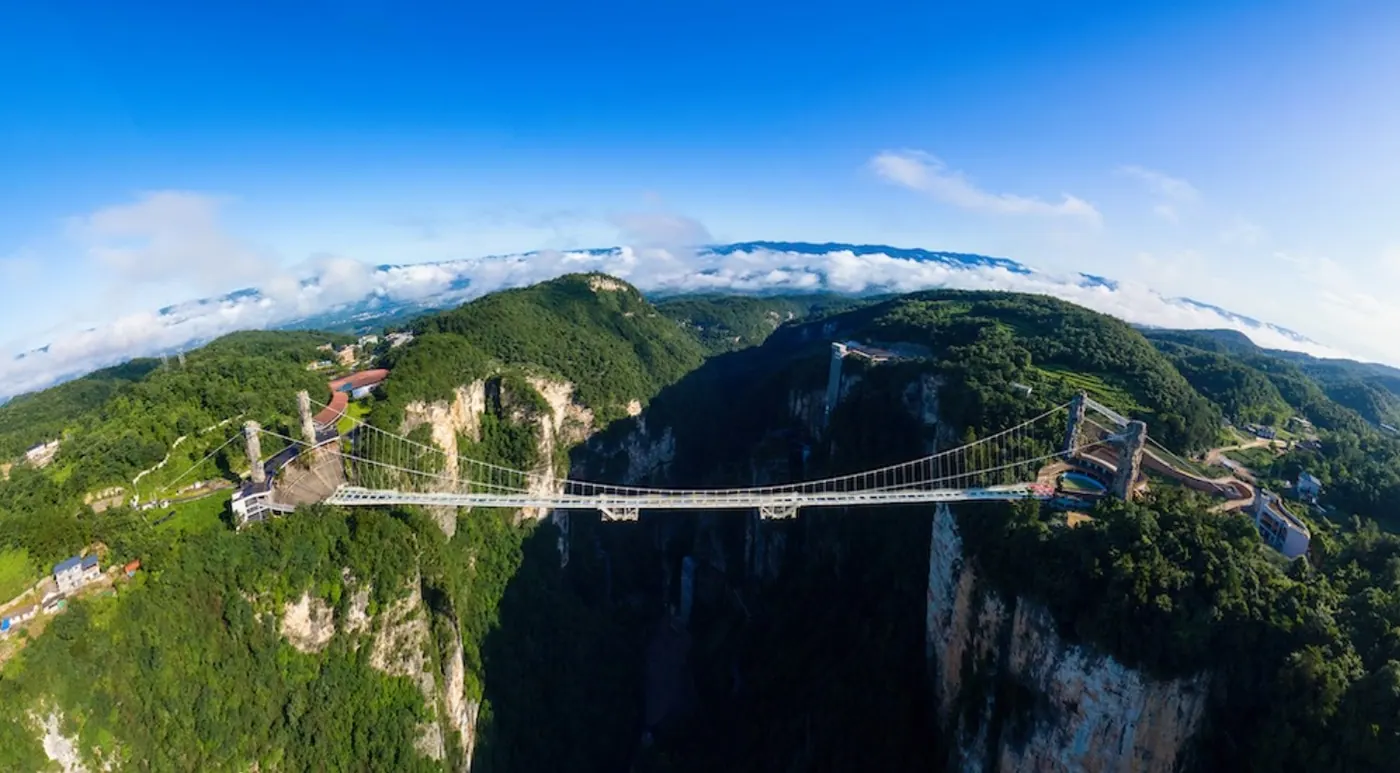
The Zhangjiajie Grand Canyon Glass Bridge
In high summer the canyon is at its greenest and the crossing at its most spectacular. The world's highest and longest glass-bottomed bridge spans a 300-metre-deep gorge between two cliffs; stepping onto the transparent deck is a pure shot of adrenaline, the canyon floor a ribbon of emerald water far below. Combine it with a descent through waterfalls and caves, and a boat ride along the river at the bottom.
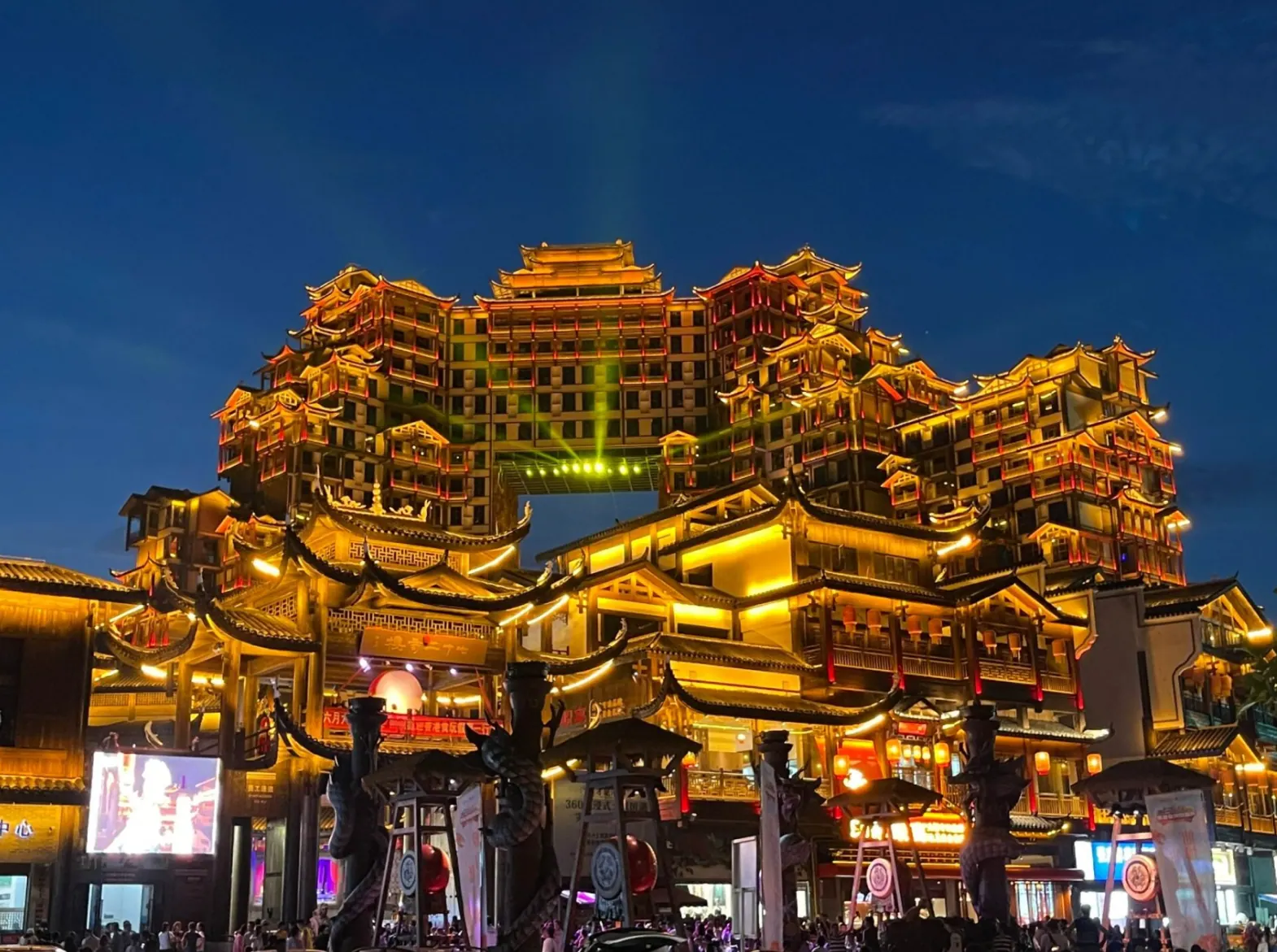
The 72 Wonders Tower After Dark
As night falls on Zhangjiajie city, the 72 Wonders Tower (七十二奇楼) switches on: a colossal, tiered tower of traditional-style pavilions wrapped in gold and crimson light, rising over a buzzing plaza of street food, shops and small performances. Gloriously, unapologetically theatrical — the mountain city's answer to a night market — it is the perfect way to round off a day among the peaks, camera in hand and a cup of sweet rice wine in the other.